
The call rarely feels like opportunity at first
There was an evening a number of years ago when I was sitting around a fire in my back yard with the men’s small group I was part of at the time. It was late and we had been talking for a couple of hours about various things going on in our lives. At some point the conversation turned to me, and the elder of our group started harassing me for not living the way he thought I should be living. He wasn’t gentle about it. He had been part of my life for a while, and he clearly felt he had earned the right to press me hard about the directions I was choosing. I sat there listening for a while, and then I did something that surprised me at the time and still surprises me a little when I think about it. I stayed calm. I didn’t defend myself with any of the old scripts I would have reached for a few years earlier. I reasoned with him, and I named as clearly as I could, that the rules he was called to live by were not the rules I was being called to live by.
Then I said something I remember almost exactly. I told him that choosing to live in the questions of life felt way more important to me than choosing to live with all the answers and then having to fit all of life into a box full of answers that I had created for myself. He certainly was not moved by any of this. He disagreed with me vehemently, and the rest of the group sat in silence around the fire while he continued to press, and I continued to gently hold my ground without escalating. When the evening ended, I went inside aware that something had shifted in me, and also aware that this shift was going to cost me something with people I cared about.
That evening was one of many moments during that period of my life when the call I was hearing did not feel like opportunity. It felt like a slow-motion collision between the person I was becoming and the person the people around me needed me to be. Nobody asks for this kind of collision. Nobody wakes up one morning and thinks it would be nice to lose the approval of the elders of their community in exchange for a set of internal directions that they cannot yet articulate to anyone else. And yet that is what the call actually asks for at this stage. It asks you to trust something you cannot explain, to hold ground you cannot fully justify, and to lose relationships that were formed under a version of you that no longer exists.
If you go looking through the mythologies of any culture across human history, you will find a nearly universal pattern in stories of transformation. The hero always refuses the call at first. The person being called into some larger becoming receives the call with reluctance, with resistance, with an urgent desire to be left alone to continue the life they had before the call arrived. The refusal is the natural response of a person being asked to leave everything they know for something they cannot yet see. It carries no moral failure and no weakness. The old stories understood this. Modern culture has largely forgotten this, replacing the truth of what transformation feels like with a shallow narrative that expects people who are becoming to feel excited about it. Real becoming usually feels like being drafted into a war you didn’t know was happening and envelops you in confusion for months or even years.
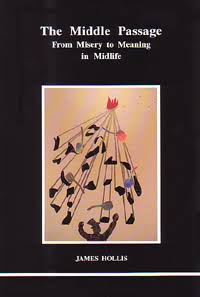
The Jungian analyst James Hollis has spent decades writing about this territory, particularly in his book The Middle Passage. Hollis’s central argument is that somewhere in the middle of life, most people encounter a demand from inside themselves to enter what he calls the second adulthood. The first adulthood was constructed largely to please the people around us and to fit into the systems we were born into. The second adulthood is the process of becoming who we actually are, as distinct from who we were shaped to be. Hollis is pretty clear about the fact that this second adulthood is demanded rather than chosen. The psyche, the body, and life’s circumstances all demand it. And almost no one wants to answer the demand when it first arrives, because answering it means dismantling much of what the first adulthood carefully built.
Hollis acknowledges that the person being asked to enter the second adulthood usually doesn’t want to enter it. They want to keep the relationships they have built, the identities they have constructed, the certainties they have accumulated. The call into the second adulthood threatens all of those, and the psyche’s initial response to the threat is a very reasonable no. The no is the beginning of the story, not the end. The person will eventually say yes because they cannot ultimately stay who they were, but the no comes first, and the no lasts longer than most people expect.

That is what my night around the fire was. It was one of the moments when I was actively saying no to something and yes to something else, and it was not going well with the people who had known me for a while. I couldn’t explain what I was choosing in any language that would have satisfied the elder pressing me. The language for what I was doing didn’t exist yet, at least not inside me. I only knew that I could no longer live inside the answers I had been given, and that some part of me needed the space to sit inside the questions long enough to find out what was actually true for me.
The call takes many shapes when it arrives, and mine was only one of them. For some people the call arrives through a diagnosis that forces them to look at what they have been outrunning for decades, or through the ending of a marriage that had been ending for years before either partner could admit, or through an empty house after the last child leaves, when the parents discover they haven’t genuinely talked to one another in a very long time. For others the call arrives through the success itself, when their career finally reaches the peak of what it can offer and the person realizes that reaching the peak hasn’t changed anything essential inside them.
Whatever the catalyst is matters less than what it does, which is to force the person into territory where the old strategies no longer work.
The refusal of the call is often in silence rather than out loud. It looks like continuing to show up to things you no longer believe in, or maintaining a marriage that has become mostly performance, or staying in a career that stopped fitting years ago. The refusal shows up wherever the person keeps doing what they were doing even after they have felt the call to do something different. That kind of refusal is far more common than the more dramatic version. Most people spend years or decades in silent refusal before they ever get to the moment where they finally begin to say yes.
What I did in the months after that campfire evening changed the trajectory of everything that followed. I took to my journal (and I read as many books as I could fit into my already busy schedule). I couldn’t explain what I was choosing in any language that would have satisfied anyone else, so I started writing about it privately, imperfectly, without any goal of making it presentable. I wrote about the disagreement with the elder, about what I felt in the days that followed, and about the questions I was sitting inside and how they kept shifting as I sat with them longer. Most of what I wrote was closer to talking to myself on the page. I certainly wouldn’t consider any of it good writing, but I knew it was in language that only I would ever read.
What that journaling did for me, over years, is give me a record of my own becoming. Looking back, I could see how the questions I had been asking a year ago had subtly changed. Positions I had been holding tentatively had solidified, certainties I previously had were now genuinely uncertain, and fears I had been carrying had gradually softened. The journal became a kind of guidebook to my own journey, one that I could only read backward. In the moment I was always inside the confusion, but looking back a year or two later, I could see the shape of what had been happening. The journal made the shape visible.
Now, when I read entries I wrote back then, I can see how far I have come from the person who sat around that fire trying to hold his ground while an older man pressed him to be someone he could no longer be. I can also see how genuine my confusion was at the time. I was not choosing the second adulthood because I had a clear vision of it. I was choosing it because the first adulthood had stopped working, and the choice to keep looking for what came next felt more true than the choice to pretend I still fit into the life I had built. The journal held that confusion until I was ready to make sense of it, which was much later than I would have predicted.
If you’re in the middle of your own refusal right now, whether the loud version or the silent one, I want you to know something. The reluctance you are feeling is a natural response to a very hard call. Nothing is wrong with you and nobody asks for this. The call arrives whether we asked for it or not, and the initial no is a normal and necessary part of the eventual yes. Whatever way you can find to bear witness to your own becoming during this period, whether journal or therapy or long walks or anything else, that witnessing is what will eventually let you see how far you have traveled. You cannot see it in the moment, but you will see it later. And when you do, you will be grateful for whatever practice you found that captured the journey while it was happening.
Peace my friends,
~Travis
Up next week: Crossing the Threshold Means Losing Protection
This essay is part of a year-long weekly exploration of how we become who we are, and why change often begins in places we were never taught to look.

